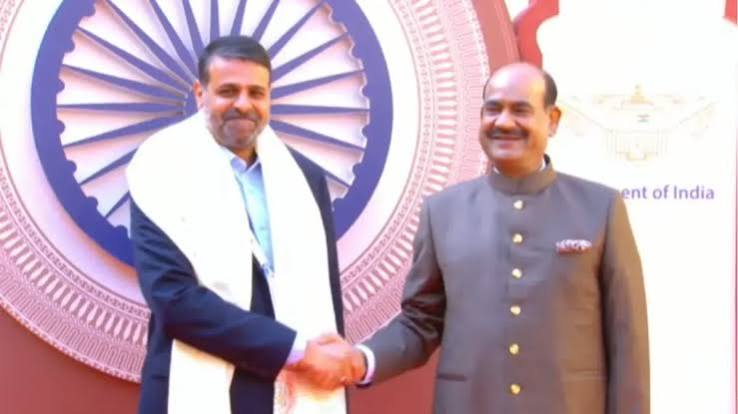

Lok Sabha Speaker Shri Om Birla today inaugurated the 12th BRICS Parliamentary Forum 2026 at the historic Samvidhan Sadan in the Parliament House Complex, New Delhi, calling upon the Parliaments of BRICS member and partner countries to strengthen their collective resolve towards people-centric development, global peace, sustainability and international cooperation. Emphasizing the transformative potential of parliamentary engagement, he underscored the need to harness the collective wisdom of nations to address shared challenges, deepen mutual understanding and bring meaningful, positive change to the lives of citizens.
Welcoming the parliamentary delegations from BRICS member and partner countries to India, Shri Birla observed that their presence reflected a shared commitment to dialogue, parliamentary cooperation, mutual respect and democratic values. He noted that notwithstanding their geographical, cultural, linguistic and social diversity, the countries were united by their faith in democratic ideals and a common sense of responsibility towards humanity. The true strength of BRICS, he said, lay in its ability to transform diversity into a source of strength, shared purpose and collective progress.
Describing the unanimous adoption of the Joint Statement at the BRICS Summit of Heads of State and Government held in New Delhi under the chairmanship of Prime Minister Shri Narendra Modi as a significant milestone, Shri Birla expressed his appreciation to the member countries. He emphasized that the real challenge now lay in translating the commitments embodied in the Joint Statement into tangible and lasting outcomes. Parliaments, through their legislative functions, budgetary processes, deliberations and oversight, could play a pivotal role in ensuring that these commitments translated into meaningful action and delivered tangible benefits to citizens.
Observing that the world was passing through a period of profound uncertainty, Shri Birla highlighted the mounting challenges posed by regional conflicts, wars, economic instability, trade tensions, terrorism and climate change. Their consequences, he noted, transcended national boundaries and called for a spirit of collective responsibility. In such a challenging global landscape, dialogue, diplomacy and cooperation assumed even greater significance. Parliaments, as vibrant expressions of the people’s will, could serve as bridges of understanding, strengthen mutual confidence, ease international tensions and help advance peaceful and constructive responses to global challenges. Through parliamentary diplomacy, elected representatives could exchange perspectives, draw upon shared experiences, identify common interests and open new avenues for meaningful international cooperation.
Shri Birla observed that BRICS carried the significant responsibility of amplifying the voice of the Global South and advancing its aspirations on the world stage. He emphasized that this aspiration must move beyond the realm of dialogue and declarations to find concrete expression in responsive policies, practical cooperation and collective initiatives that improve people’s lives. The strength of the grouping, he noted, would be reflected in its ability to transform shared aspirations into purposeful action and ensure that the concerns and priorities of developing nations received due consideration in global decision-making.
Highlighting the theme of the 12th BRICS Parliamentary Forum 2026, ‘Strengthening Parliaments for People-Centric Development’, Shri Birla said it held particular relevance in the contemporary global context. The two-day Forum would provide an important platform for comprehensive deliberations on four interconnected pillars—resilience, innovation, cooperation and sustainability—each essential to strengthening democratic institutions and advancing inclusive development in an increasingly interconnected world.
Emphasizing the need for resilient parliamentary institutions, Shri Birla stated that BRICS countries must continually strengthen their legislative frameworks and institutional capacities to ensure continuity, accountability and effective democratic oversight, particularly in times of uncertainty and disruption. Parliaments, he observed, were living institutions that must evolve in step with the changing aspirations of the people. Their strength lay not merely in their constitutional authority but also in their ability to foster constructive dialogue, build consensus, uphold transparency and remain steadfastly accountable to the citizens they represent.
Underscoring the transformative role of innovation in parliamentary functioning, the Lok Sabha Speaker said that innovation extended beyond the adoption of new technologies to encompass fresh ideas, progressive practices and institutional reforms that made democratic institutions more effective, transparent, participatory and responsive. By embracing constructive change and strengthening institutional capabilities, parliaments could enhance the quality of deliberation, improve public engagement and respond more meaningfully to the evolving expectations of citizens.
Reflecting on the immense potential of parliamentary cooperation, Shri Birla observed that the diversity of BRICS countries was not a constraint but a valuable asset that could be harnessed for the common good. By sharing experiences, exchanging best practices and learning from one another’s institutional strengths, their parliaments could collectively devise innovative responses to shared challenges. Such sustained engagement, he said, would help lay the foundations of a more equitable, inclusive and peaceful world.
He further emphasized that the essence of parliamentary diplomacy lay in fostering a culture of cooperation while fully respecting the sovereignty and distinctive perspectives of every nation. Differences in national circumstances need not impede the pursuit of common objectives; rather, constructive engagement could turn diverse viewpoints into opportunities for mutual learning and collective advancement. Calling for renewed commitment among BRICS member countries, Shri Birla urged them to transform experience into joint action, understanding into enduring trust, and dialogue into concrete and meaningful cooperation.
Turning to the imperative of sustainable development, Shri Birla observed that Indian philosophical thought regarded development and environmental preservation as complementary, mutually reinforcing pursuits. This holistic perspective, he said, offered an important guiding principle for the parliaments of BRICS countries. Development must not come at the cost of ecological balance; instead, policies for economic and social progress must be shaped by environmental responsibility, long-term sustainability and a deep commitment to safeguarding the interests of future generations. Collective action in this direction was indispensable to building a world that was prosperous, inclusive and environmentally secure.
Drawing attention to the hopes and aspirations of the younger generation, Shri Birla observed that today’s youth were equipped with growing access to quality education and technological knowledge, alongside an immense desire to innovate, excel and contribute to society. Their aspirations must be met with meaningful opportunities, dignity and an enabling environment in which their talents could flourish. Parliaments, he emphasised, had a vital responsibility to listen to young voices, understand their hopes and concerns, and create pathways through which their energy, creativity and capabilities could be channelled into nation-building. Empowering young people, he said, was not merely an investment in their individual futures but a commitment to the collective destiny of nations.
Referring to Prime Minister Shri Narendra Modi’s vision of transforming BRICS into an ‘ecosystem of solutions’, the Lok Sabha Speaker underscored that the true measure of the Forum’s success would lie not in the breadth of its discussions alone, but in the depth of its outcomes and the difference they made to people’s lives. He called upon the parliaments of member countries to work towards a forward-looking agenda for a shared future, ensuring that dialogue culminated in action and cooperation yielded measurable results.
Shri Birla observed that although BRICS countries differed in their national circumstances, developmental priorities and perspectives, they were united by fundamental aspirations: peace, security, mutual respect, equal opportunities and a better quality of life for their citizens. These shared aspirations, he said, provided a strong foundation for deeper engagement and purposeful cooperation. The BRICS Parliamentary Forum must therefore emerge as a dynamic platform for building confidence, fostering understanding and advancing collective action in pursuit of these common goals.
Expressing confidence in the outcomes of the deliberations, Shri Birla said that the 12th BRICS Parliamentary Forum would further deepen the bonds of partnership among member countries and contribute meaningfully to the emergence of a more inclusive, peaceful and sustainable world. He expressed the hope that the discussions would impart fresh impetus to mutual trust and international cooperation, strengthen the collective commitment to people-centric development, and reinforce the shared determination of BRICS countries to translate common aspirations into enduring achievements.
On the occasion, Deputy Chairman of the Rajya Sabha Shri Harivansh also addressed the gathering. The Secretary-General of the Lok Sabha delivered the welcome address.